Service Area
Frisco, TX
Exhibit and event production across Frisco's cluster of destination venues, from the Star's Omni conference center to the PGA Frisco resort campus.
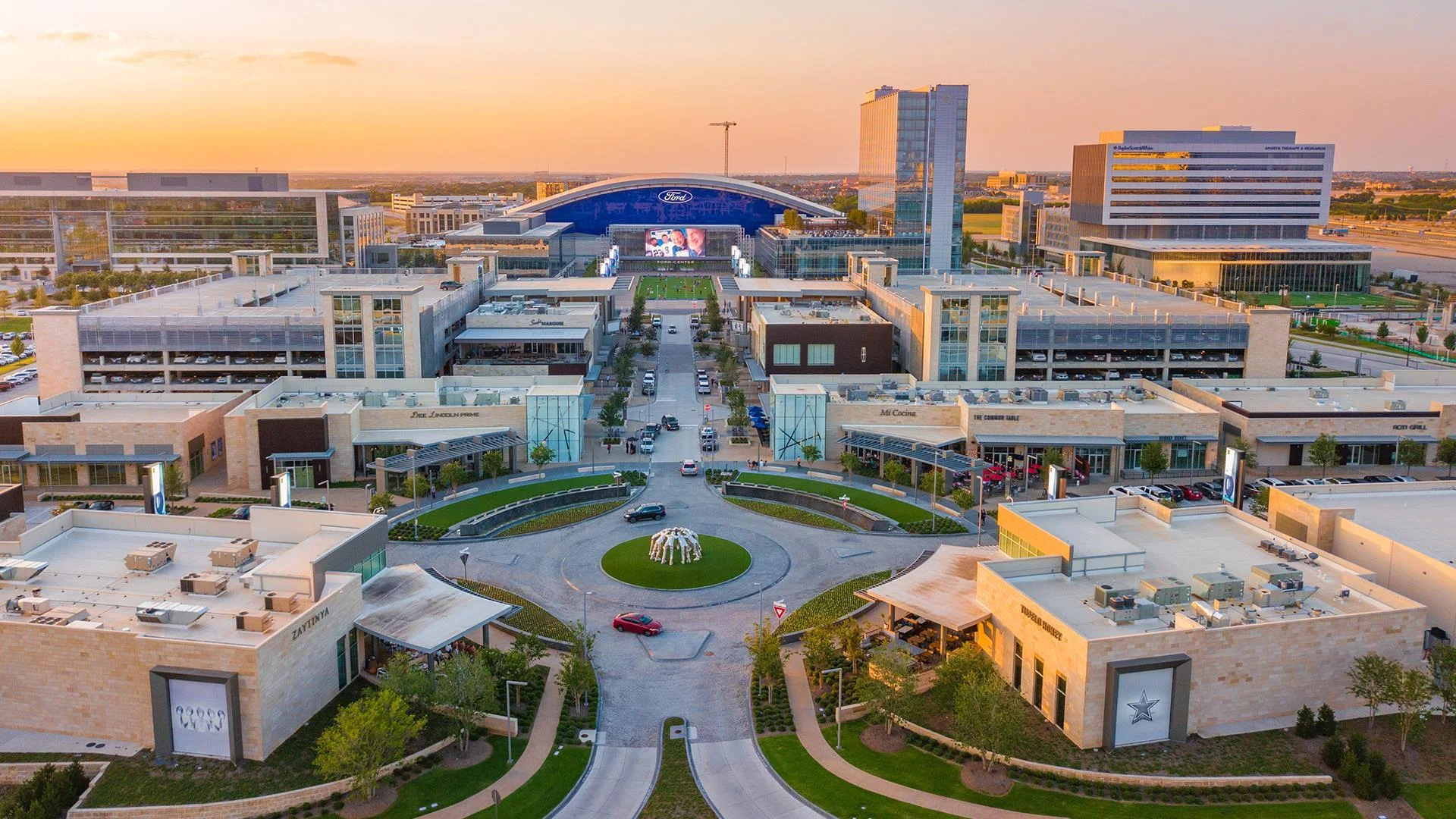
Frisco is unusual among Dallas suburbs because it has become a destination in its own right, with three distinct hotel-and-conference properties tied to sports, entertainment, and golf rather than a single downtown convention hall. That gives planners real choice — a corporate-campus feel at the Star, a resort feel at PGA Frisco, or a straightforward conference hotel at Embassy Suites — and it means our crews plan each Frisco show around the specific property, not a generic suburban venue.
Growth here has been fast enough that venue infrastructure, hotel inventory, and even loading-dock access are still catching up to demand on peak weekends, which makes early logistics planning more important in Frisco than in most of the metro's older suburbs.
Frisco's Show Market
Frisco's event calendar mixes corporate meetings tied to its growing headquarters base, sports-adjacent programming tied to the Dallas Cowboys' training facility at the Star, golf industry and hospitality events at PGA Frisco, and conference-hotel business meetings at Embassy Suites. It is a younger, faster-growing market than Plano or Irving, and the mix of event types reflects that.
The Right Venues: Three Distinct Properties
Embassy Suites & Frisco Conference Center is the workhorse conference-hotel venue for straightforward meetings and mid-size expos. Omni Frisco Hotel at the Star sits inside the Dallas Cowboys' mixed-use campus and suits corporate and sports-adjacent programming that wants that address. Omni PGA Frisco Resort is a golf-and-meetings destination suited to incentive programs, hospitality events, and conferences that want resort-scale amenities. We match the client's event type to the right one rather than defaulting to whichever is available.
Embassy Suites Frisco Conference Center — straightforward meetings & expos
Omni Frisco Hotel at the Star — corporate & sports-adjacent
Omni PGA Frisco Resort — incentive & hospitality programs
Freight and Loading
Loading procedures differ meaningfully across the three properties: Embassy Suites runs a standard hotel-conference dock, the Star's Omni has loading coordinated through the broader mixed-use campus and can require additional lead time for campus security clearance, and PGA Frisco's resort layout means freight often routes through a service entrance separate from guest arrival. We confirm the specific property's dock protocol before quoting any Frisco job.
Labor Coordination
Labor calls in Frisco draw from the same North Texas union locals as the rest of the metro, but crew scheduling has to account for property-specific badge and security requirements, especially at the Star campus, where crews working near the practice facility go through an additional access process.
Drayage and Warehousing
Advance freight for Frisco shows stages through our North Dallas warehouse and trucks in on a schedule matched to whichever property is hosting, since each has a different dock window and receiving process. We build the drayage timeline around the specific venue rather than a generic suburban assumption.
Install and Dismantle
Resort and hotel-campus venues like PGA Frisco and the Star's Omni often run install alongside active hotel guest traffic and, at the Star, ongoing campus operations, so we schedule the noisier phases of build — crating, forklift moves, rigging — for windows that don't collide with guest check-in or campus events.
Booth and Exhibit Build
Frisco's event mix runs toward sponsor activations, hospitality lounges, and branded meeting environments more than dense trade-floor rows, particularly at PGA Frisco and the Star, where the audience is invited guests rather than walk-the-floor attendees. Our fabrication work here leans custom and photo-ready.
AV and Rigging
Each property has different ceiling heights, power drops, and house AV relationships. Embassy Suites' ballroom supports standard rigging for general sessions; the Star's event spaces are newer and built with modern power and data infrastructure; PGA Frisco's resort meeting spaces are sized for smaller, higher-production programs. We spec against the actual room, confirmed with the property in advance.
Show-Site Supervision
A site supervisor stays on-property for the full event cycle at whichever Frisco venue is booked, serving as the single point of contact between the client, the property's events team, and our labor and AV crews — important at destination properties where house staff are managing multiple client-facing groups at once.
Logistics and Shipping
Outbound shipping is consolidated at our warehouse after teardown at any of the three Frisco properties, keeping return freight costs consistent regardless of which venue hosted the event.
Crew Lodging
When the event itself is at a hotel property, crew lodging often books at that same hotel for convenience, though for larger PGA Frisco programs we sometimes place crew at a lower-cost property nearby to manage lodging spend on multi-day builds.
Parking and Dock Access
Parking varies sharply by property: Embassy Suites offers straightforward surface parking, the Star's campus has structured and surface options shared with other campus tenants, and PGA Frisco's resort parking is valet-forward, which requires separate arrangements for crew and vendor vehicles.
Timing and Lead Time
Frisco's popularity as a destination means peak weekends at all three properties book out well in advance, especially PGA Frisco during golf season and the Star during Cowboys training-camp adjacent periods. We recommend locking dates and dock windows earlier here than in most suburban markets.
Budget Realities
Destination-property pricing at PGA Frisco and the Star tends to run higher than a standard conference hotel like Embassy Suites, both in venue rental and in F&B minimums. We set client expectations on that spread early rather than letting a resort-scale quote arrive as a surprise.
What Makes Frisco Specific
Frisco is the rare suburb that functions as a destination rather than a pass-through market, and its three anchor properties each carry a distinct identity — corporate-campus, resort, and conference-hotel — that shapes what kind of event belongs there.
Event Types That Fit Frisco
Corporate meetings and sales events, sports-and-entertainment-adjacent programming, golf industry and hospitality conferences, incentive trips, and destination-style association meetings all fit one of Frisco's three properties.
Corporate meetings & sales events
Golf industry & hospitality conferences
Incentive and destination association meetings
Routing to Nearby Markets
For programs that need convention-hall scale beyond any single Frisco property, we route to Plano Event Center to the south or Dallas Market Hall and Kay Bailey Hutchison Convention Center Dallas further into the metro core, both within a reasonable drive for shared crew and freight.
How We Run It Here
Frisco rewards planning that treats each property as its own venue rather than a suburb-wide default: dock protocol, badge access, parking, and F&B expectations all shift depending on whether the show lands at Embassy Suites, the Star, or PGA Frisco, and we build the production plan around whichever one it is.
Frisco, TX — what the area looks like for events
Frisco, TX is part of the the city event market. Shows and meetings book here alongside the larger the city calendar.
Production for Frisco, TX shows starts with the same brief we run for the rest of the city: venue specifics, show dates, footprint, outcome. Freight paths and local vendor availability are the variables that shift from the city core.
Who handles what during the the city install window
Most of what goes wrong on a the city install traces back to assumptions about labor. We stay inside the rules for the specific show, which prevents it.
On most the city shows, the labor plan takes one call with the venue's exhibitor services desk, one review of the current manual, and one email to the general contractor. Skipping any of those three is usually where problems start.
Where the city shows actually happen
The building matters more than almost anything else in a trade show plan. A few the city venues carry most of the calendar.
The right building depends on the show: a consumer expo wants open aisles and broad traffic flow; a corporate conference wants controlled breakout space; a brand activation wants a venue that can carry scenic and production without fighting the architecture.
Westin Dallas Downtown. It is located adjacent to the Kay Bailey Hutchison Convention Center.
Kay Bailey Hutchison Convention Center Dallas is one of the anchors. The published loading dock entrance is at 837 S Lamar St. and official dock hours are 4 a.m. to 8 p.m.
Dallas Market Hall: visit Dallas describes Dallas Market Hall as the world's largest privately owned exhibition hall.
the city trade show market
Trade shows in the city move fast. Major venues book out months in advance, freight windows run tight, and the exhibitors who win their weeks are the ones who arrive with a plan already in hand.
Exhibitors pulling back on budget in the city still have to show up in the same booth neighborhoods as their competitors. Scope gets tighter; standards don't. The booths that land well are the ones built on a specific plan, not a standard layouts.
the city offers more than 440,000 square feet of meeting space and is near two major airports, which sets the practical ceiling for a booth program working the market.
Omni Dallas Hotel as adjacent to the Dallas Convention Center, reinforcing the downtown hotel-plus-convention-center workflow — a useful reference point when sizing a project.
Line items on a typical project
Projects in Frisco, TX typically include design work, fabrication or rental sourcing, graphics production, show-service paperwork, freight, install, show-hours coverage, and strike.
What shows up in most budgets: structure, graphics, AV, show-service orders through the venue, labor, freight, supervision days, and closeout. Individual projects layer or remove items based on scope.
The handoffs on a project in Frisco, TX matter almost as much as the line items. Design has to hand a build-ready drawing to fabrication. Fabrication has to hand a pre-built, dry-fitted booth to crating. The crater has to hand a labeled, manifested shipment to the carrier. Every handoff is a place quality can drop.
Multi-show programs add asset management: storage, refurbishment, graphic swaps, and scheduled re-kitting so the booth rolls cleanly from the city to the next city on the calendar.
A clean scope definition also calls out what isn't included: show organizer fees, client staff travel, and anything the client already has under contract (lead capture platforms, CRM integrations, promotional giveaways). Those run alongside the engagement rather than inside it.
From first call to strike
First step on any project is pinning down the show, the floor plan, the deadlines, and what success actually looks like. Everything downstream hinges on those answers.
Venue coordination comes next. We pull the current exhibitor manual, confirm dock and freight windows, submit rigging approvals where needed, and place utility orders against the venue specs we work to.
With venue details locked, production runs. Build, print, AV integration, rentals, and the show floor lead's playbook all come together in this phase.
The install phase has one owner on the floor. That person handles the labor calls, the graphics questions, the sequence adjustments, and the daily update.
During show hours, the booth functions as a live operating space. A booth supervisor manages repairs, sponsor requests, lead-capture issues, and any venue questions so client staff can focus on conversations.
After the show, strike runs against the venue's posted window, and a same-day debrief captures what held and what needs to change before the next date.
Budget and timeline
Pricing is driven by real line items: fabrication or rental, graphics, show services, labor, freight, and travel where it applies. Round numbers without that breakdown usually hide something.
The levers that matter: build path (custom, rental, or hybrid), footprint, venue service fees, graphics, freight, and supervision days. A 10x10 turnkey rental and a 30x50 custom island with a double deck are entirely different projects.
A clean schedule starts 4 to 5 months out for custom work and 2 to 3 months for rentals. Shorter lead times are workable but push rush premiums and limit material choices.
Outcomes we optimize for
A successful project in the city looks like a booth that lands on time, passes venue inspection on the first walk, runs without incident through show hours, and ships out the same day it strikes.
Exhibitors who measure programs seriously track leads, floor-booked meetings, and post-show pipeline. The build and the install are upstream inputs to those KPIs.
Client teams sometimes want the booth to carry the pipeline on its own, but the best-performing programs treat the booth as a platform and put real operators on it. On-floor conversation discipline moves the KPIs more than any scenic decision.
The advantage of a local the city team
Trade Show Services operates out of the city with a full in-house production shop. Custom fabrication, rental inventory, graphics production, and show-site labor live under one roof.
The difference from a national vendor shows up at the dock. A local team with an in-house shop can solve most install-day problems in the time it takes to drive back to the building with the right part.
Over a multi-show calendar, the compound value of a single team shows up in fewer surprises. The second install is faster than the first, the third is faster than the second, and by the fourth the project runs on memory and documentation rather than first-principles planning.
Frisco, TX planning questions
Q: Do you work at Plano Event Center?
Yes. the venue has 86,400 square feet of meeting facility space. Projects at that building are planned against its specific floor rules.
Q: How much lead time is ideal?
Custom builds run best with 16 to 20 weeks of lead time. Rentals take 8 to 12 weeks. Work inside 4 weeks is possible but raises costs and narrows the options.
Q: What information kicks off a project?
The show, the venue, the booth number, the dates, and a target budget range. From those, an initial scope and a realistic cost come back within a few days.
Q: Who runs the booth on-site?
One named show-site lead runs the install, the show hours, and the strike. That person carries the floor plan and the punch list from crates to doors and reports up once a day.
Q: Can the booth travel to the next city on our calendar?
Yes — builds are designed for modular reuse unless single-use scenic is specifically required. Same structure, swappable graphics, standard crates. the city programs that roll to another city on the same calendar get handled end to end.
Q: What happens if something breaks during show hours?
The show floor lead handles it. Minor repairs happen in place; anything larger gets sourced from the local fabricators or rerouted through the venue's service desk.