Booth Type
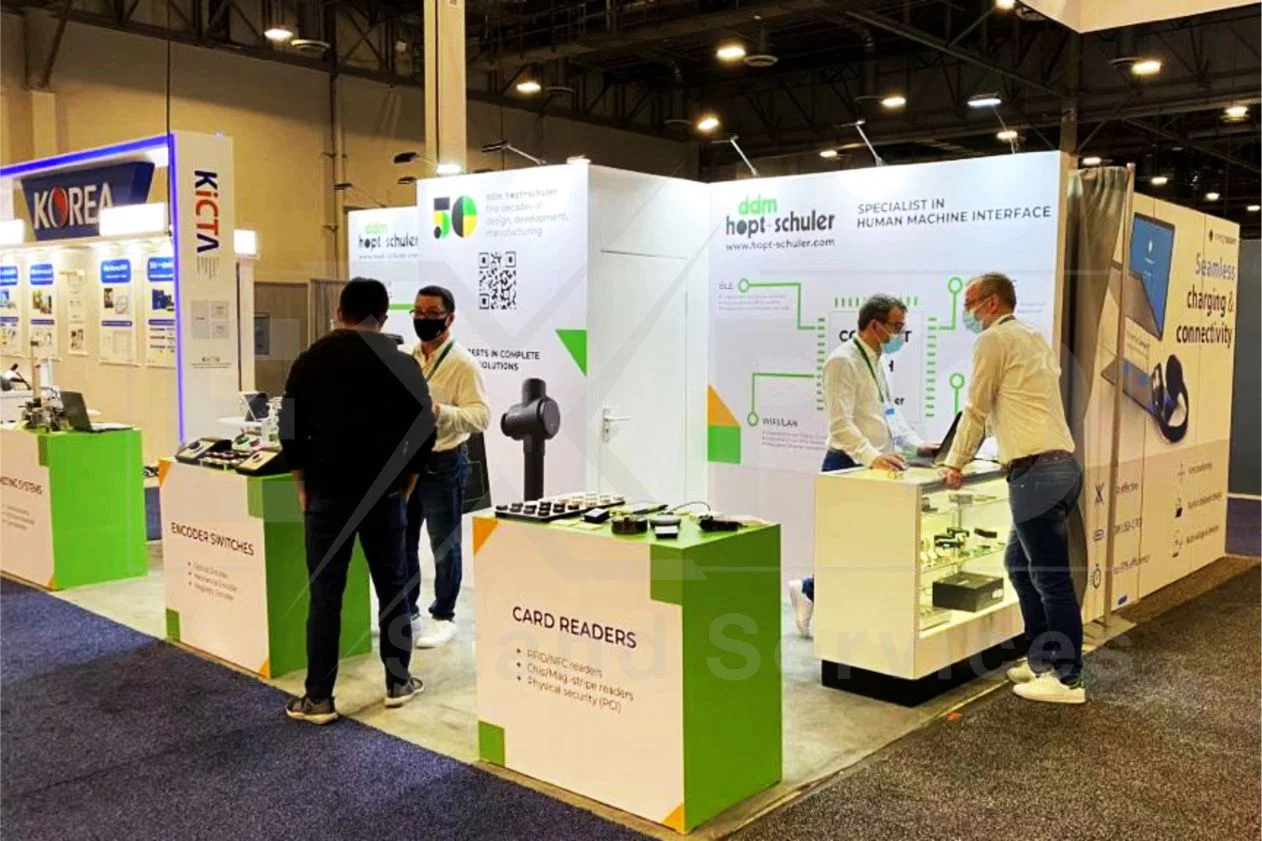
Rental Exhibit Booths
Rental Exhibit Booths is more than a footprint label.
Footprint rules, neighbor visibility, traffic logic, and rigging review all change how a booth performs on the floor.
Below is the buildout pattern, labor profile, and show-site behavior we plan around for this format.
Why Rental Exhibit Booths needs its own planning approach
The strongest advantage of this format is speed, flexibility, and reduced fabrication commitment for short or changing calendars. That benefit only becomes real, though, if the scope also accounts for making the rental system feel like a real brand environment rather than a generic shell.
For clients, the practical value of naming the booth type early is that it clarifies what the environment should prioritize and which compromises are acceptable before money gets committed to production.
Design, fabrication, and technical implications
Booth type affects more than shape.
The right plan keeps the booth type connected to adjacent services such as exhibit installation and dismantle rather than isolating it as a design-only topic.
Venue fit, access, and show-site sequence
Short-notice events, multi-market testing, and budget-conscious programs is the most natural match for the booths, but venue fit still depends on the event and the city.
The payoff is a booth that feels intentional in the room instead of one that merely fits within the dimensions.
Attendee experience and staffing logic
Some formats are designed around fast pass-by visibility.
It also changes staffing logic.
How Rental Exhibit Booths fits different industries and programs
Aerospace and Defense Expo Services is one example of how the same booth type can take on a different job depending on the buyer. In one sector the priority may be product demonstration.
For clients comparing options, this page should help clarify whether the format supports the outcome you want or whether a different footprint would make the show easier to execute and easier for guests to understand.
What to decide before moving into design or production
It is also useful to decide whether the booth needs to expand, repeat, or adapt across more than one city. DFW programs often lead into broader regional calendars, and some booth formats support that much better than others.
With those inputs, the booths becomes an operating choice instead of a stylistic one.
How to measure whether Rental Exhibit Booths is the right format
The clearest way to evaluate the booths is to test it against the real job the booth has to do. Does the format support the right attendee pace.
These booth-type guides are designed around operational outcomes so clients can choose a format that works in the real conditions of the show, not simply in the abstract language of exhibit design.
How Rental Exhibit Booths stays practical after signoff
The booths stays practical after creative signoff only if it still works for install, staffing, attendee movement, storage, technical systems, and the venue rules that shape how the booth reaches the floor.
A booth format earns its place by making the build easier to run and the audience easier to serve.
Dallas-Fort Worth trade show market
Trade shows in the city move fast.
Trade show weeks in the city compress decisions.
Where Dallas-Fort Worth shows actually happen
A few the city venues carry most of the calendar.
The plan has to match the specific building.
Hilton Dallas Lincoln Centre: it includes 503 guest rooms.
Who handles what during Dallas-Fort Worth install window
Most of what goes wrong on a the city install traces back to assumptions about labor. Staying inside the venue's published rules for the specific show prevents it.
The workable version of the city labor planning is boring on purpose: read the manual, match the scope to its categories, order what the venue sells directly, and schedule everything else around its posted windows. Surprises almost always trace back to a step someone skipped.
Scope on a rental exhibit booths project
Individual projects layer or remove items based on scope.
A bad one has many, because they weren't.
From first call to strike
Once scope is clear, the venue work begins.
One named show-site lead runs the install.
That document drives the next booking.
Budget and timeline
Cost scales with how it is built, how big it is, what the venue charges for its own services, what the graphics look like, how far the crates travel, and how many days the team stays on-site.
Rental programs run on 8 to 12.
What a successful project looks like
Trade show ROI is measured at the lead and pipeline level.
The post-show debrief is where the numbers get connected back to the physical booth. Which demo station drew traffic, which meeting area closed more conversations, which graphic zone attracted dwell time — that feedback shapes the next build rather than getting lost.
The advantage of a local Dallas-Fort Worth team
Local fabrication means real-time problem-solving. A graphic that needs to be reprinted at 6 a.m.
Clients who run repeat programs across multiple dates end up paying less per event when the same team handles everything. Less re-briefing, less re-training, less re-checking — the operational overhead drops year over year.
Rental Exhibit Booths planning questions
Q: Do you work at Hilton Dallas Lincoln Centre?
Yes. It is located in the LBJ Freeway corridor in North Dallas.
Q: How much lead time is ideal?
Q: What information kicks off a project?
Q: Who runs the booth on-site?
Q: Can the booth travel to the next city on our calendar?
Same structure, swappable graphics, standard crates.
Q: What happens if something breaks during show hours?
The on-site lead handles it.
the city trade show market
Trade shows in the city move fast. Major venues book out months in advance, freight windows run tight, and the exhibitors who win their weeks are the ones who arrive with a plan already in hand.
Trade show weeks in the city compress decisions. Dock windows are finite, rigging slots fill fast, and the labor calendar around a citywide conference runs hot. Exhibitors who treat planning as optional lose time they don't get back.
the city offers more than 440,000 square feet of meeting space and is near two major airports.
Omni Dallas Hotel as adjacent to the Dallas Convention Center, reinforcing the downtown hotel-plus-convention-center workflow, which sets the practical ceiling for a booth program working the market.
Where the city shows actually happen
The building matters more than almost anything else in a trade show plan. A few the city venues carry most of the calendar.
Across the the city venue set, what changes between buildings are the labor model, the rigging approval path, the drayage setup, and the published move-in window. The plan has to match the specific building.
Hilton Dallas Lincoln Centre: it includes 503 guest rooms.
Fair Park. It is a 277-acre historic landmark campus in South Dallas.
Marriott Dallas/Fort Worth Westlake is one of the anchors. It offers over 26,000 square feet of meeting and event space.
Who handles what during the the city install window
Most of what goes wrong on a the city install traces back to assumptions about labor. We stay inside the rules for the specific show, which prevents it.
The workable version of the city labor planning is boring on purpose: read the manual, match the scope to its categories, order what the venue sells directly, and schedule everything else around its posted windows. Surprises almost always trace back to a step someone skipped.
Scope on a rental exhibit booths project
Project scope usually spans design, fabrication, graphics, AV, labor coordination, freight, install, show-hours support, and strike.
What shows up in most budgets: structure, graphics, AV, show-service orders through the venue, labor, freight, supervision days, and closeout. Individual projects layer or remove items based on scope.
A well-run project has few surprises on install day because the handoffs upstream were tight. A bad one has many, because they weren't.
Multi-show programs add asset management: storage, refurbishment, graphic swaps, and scheduled re-kitting so the booth rolls cleanly from the city to the next city on the calendar.
Out of scope by default are show organizer fees, booth lease costs paid directly to the show, staff travel and per diems, and any custom software or data-capture tooling the client runs on its own stack. Those stay on the client side and plug into the project through coordination, not rebilling.
From first call to strike
Every project starts with a scope conversation: the show, the venue, the booth number, the dates, and the budget frame. Ten minutes of specifics produces a better plan than a week of generalities.
Once scope is clear, the venue work begins. Exhibitor manual, dock times, utility order IDs, rigging submissions for hanging elements, and labor calls all get locked against the venue's actual rules.
Production brings the plan into physical form: fabrication, graphics, AV, rentals, and the named lead who will run the floor.
One named show-site lead runs the install. Not a rotating crew and not a remote account manager — one person holds the floor plan, the punch list, and the labor calls from crates to doors.
Show-hours coverage is part of every engagement — not a premium add-on. On-floor support keeps the booth running while the client team runs the pipeline.
Closeout is tight: strike, crate, manifest, storage designation, and a written post-show report delivered within a day. That document drives the next booking.
Budget and timeline
An honest quote itemizes the variables. There is not a single price — there is a configuration.
Cost scales with how it is built, how big it is, what the venue charges for its own services, what the graphics look like, how far the crates travel, and how many days the team stays on-site.
On timing: custom builds for the city shows run best with 16 to 20 weeks of lead time. Rental programs run on 8 to 12. Anything inside 4 weeks is a rush, which means fewer options and a premium on materials.
What a successful project looks like
A project runs well when install clears the venue's published window, all show services land as ordered, the booth performs across every show day without pulling the client team off pipeline work, and strike clears the dock before the next occupant loads in.
Trade show ROI is measured at the lead and pipeline level. The show-floor execution either protects or undermines those numbers.
The post-show debrief is where the numbers get connected back to the physical booth. Which demo station drew traffic, which meeting area closed more conversations, which graphic zone attracted dwell time — that feedback shapes the next build rather than getting lost.
The advantage of a local the city team
Trade Show Services is the city's local trade show team, with in-house design, fabrication, graphics, and show-site crews. One shop, one point of contact, one accountable lead on every project.
Local fabrication means real-time problem-solving. A graphic that needs to be reprinted at 6 a.m. on install day is a same-morning fix, not a three-day shipping delay.
Clients who run repeat programs across multiple dates end up paying less per event when the same team handles everything. Less re-briefing, less re-training, less re-checking — the operational overhead drops year over year.
Rental Exhibit Booths planning questions
Q: Do you work at Hilton Dallas Lincoln Centre?
Yes. it is located in the LBJ Freeway corridor in North Dallas. Projects at that building are planned against its specific floor rules.
Q: How much lead time is ideal?
Custom builds run best with 16 to 20 weeks of lead time. Rentals take 8 to 12 weeks. Work inside 4 weeks is possible but raises costs and narrows the options.
Q: What information kicks off a project?
The show, the venue, the booth number, the dates, and a target budget range. From those, an initial scope and a realistic cost come back within a few days.
Q: Who runs the booth on-site?
One named show-site lead runs the install, the show hours, and the strike. That person carries the floor plan and the punch list from crates to doors and reports up once a day.
Q: Can the booth travel to the next city on our calendar?
Yes — builds are designed for modular reuse unless single-use scenic is specifically required. Same structure, swappable graphics, standard crates. the city programs that roll to another city on the same calendar get handled end to end.
Q: What happens if something breaks during show hours?
The show floor lead handles it. Minor repairs happen in place; anything larger gets sourced from the local fabricators or rerouted through the venue's service desk.