Service Area
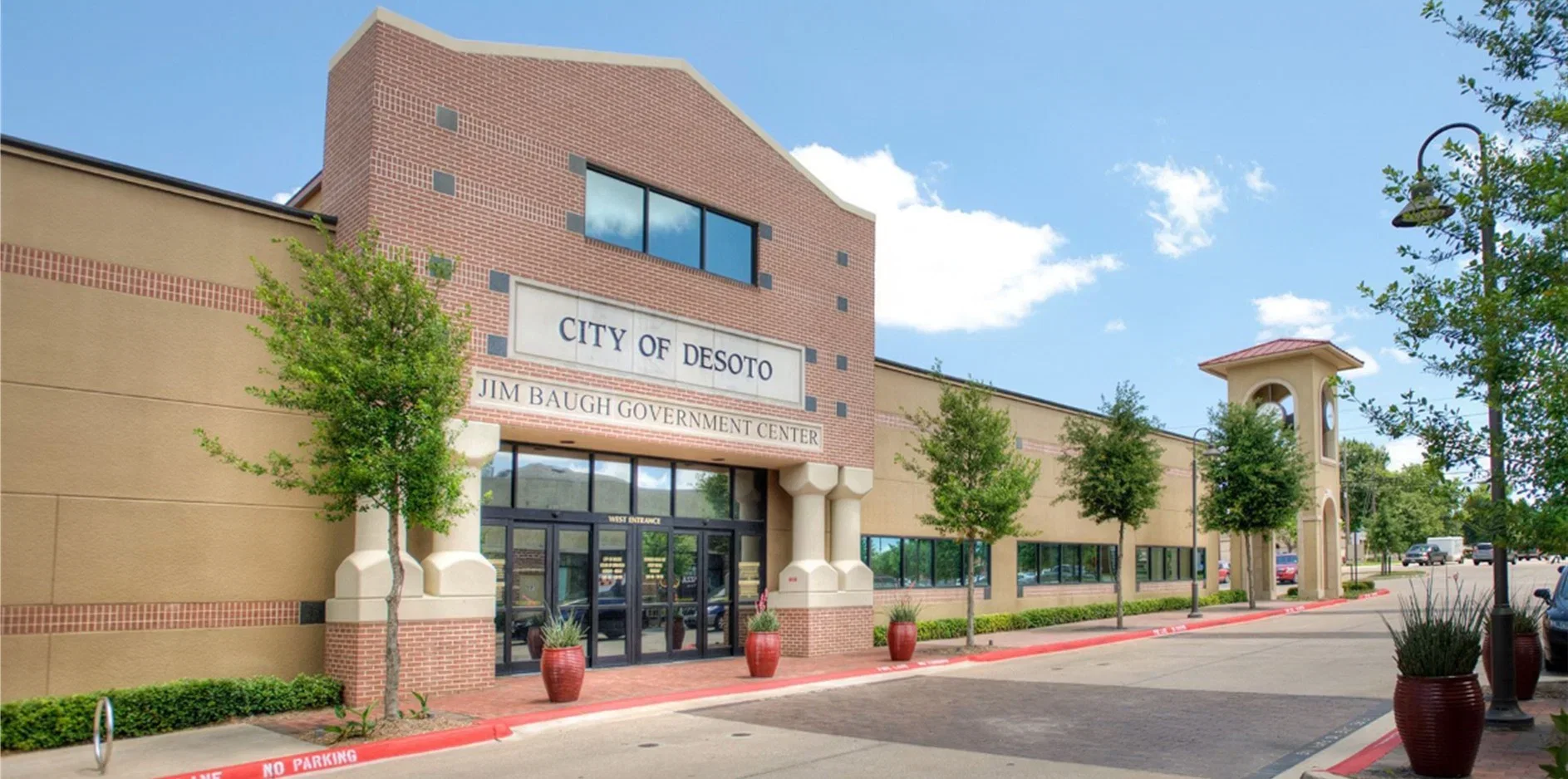
Desoto, TX
DeSoto's corporate office parks off I-35E send exhibitors north to the downtown Dallas convention halls, and we plan every DeSoto show around that eighteen-mile freeway run.
DeSoto is a Best Southwest suburb built along I-35E, home to corporate and distribution employers whose marketing and sales teams exhibit regularly at the Dallas halls without ever hosting a show locally. For those companies the planning question isn't which DeSoto venue to use — there isn't one — it's how to get freight, crew, and booth structure to Kay Bailey Hutchison Convention Center Dallas or a downtown hotel ballroom on schedule.
DeSoto's proximity to downtown, closer than Cedar Hill or Duncanville along the same corridor, means we can often run a same-day install and dismantle for local exhibitors, holding hotel nights in reserve only for early-call or multi-day shows.
DeSoto's place in the Dallas show market
DeSoto sits directly on I-35E roughly fifteen miles south of downtown Dallas, making it one of the closer Best Southwest suburbs to the convention core. The city itself hosts no trade shows; its role in this market is as a source of exhibiting companies and crew, not a destination.
The right venue for a DeSoto exhibitor
Kay Bailey Hutchison Convention Center Dallas is the default target for DeSoto-based exhibitors given the direct I-35E run; Dallas Market Hall is the alternative for gift, trade, and market-week shows on the same corridor.
Kay Bailey Hutchison Convention Center Dallas — primary hall
Dallas Market Hall — trade/market alternative
Freight and loading from DeSoto
DeSoto's office and light-industrial parks along I-35E and Beltline Road give exhibitors dock or drive-up loading well suited to straight trucks, and the direct freeway access means a loaded truck can be at a downtown marshaling yard within thirty minutes of leaving.
Labor for a DeSoto load-in
Install and dismantle labor for a DeSoto exhibitor's booth is drawn from the same downtown Dallas union pool used at every hall show — DeSoto's location doesn't change the labor call, only the exhibitor's own commute.
Drayage and warehousing
Because there is no local hall, exhibit freight for DeSoto clients is warehoused at our Dallas-area facility ahead of show week and released to the venue dock on the general contractor's target date, the same process used for every non-hall-adjacent exhibitor in the metro.
Install and dismantle timing
DeSoto's short I-35E run to downtown means we can frequently schedule install in the morning and dismantle late the same evening without putting crew in a hotel, which keeps smaller DeSoto exhibitors' budgets tighter than exhibitors traveling farther.
Booth and exhibit build for DeSoto exhibitors
Exhibit fabrication happens in our shop and ships to whichever downtown hall the show occupies; DeSoto companies sometimes ask about staging the finished booth at their own facility first, and we can do that when the timeline allows, though it adds a handling step rather than saving one.
AV and rigging
AV, power, and rigging are coordinated against the house venue's plot — typically Kay Bailey Hutchison Convention Center Dallas — and DeSoto's location has no bearing on that process; it is entirely a downtown-hall coordination.
Show-site supervision
We staff on-site supervision for DeSoto exhibitors through the full show window regardless of the short commute; a nearby exhibitor still needs someone watching the booth during dead hours and coordinating with the general contractor.
Logistics and shipping
Advance and direct freight for DeSoto clients ship to the downtown hall's dock on the show's published schedule; we manage bills of lading the same way whether the exhibitor is fifteen miles away or fifteen hundred.
Hotels and lodging for the crew
Because DeSoto is close enough for a round trip, we typically skip hotel nights for local crew unless the show requires an early call time or overnight dismantle, in which case we book downtown at a property like the Hyatt Regency Dallas or Fairmont Dallas.
Parking and dock access
The relevant dock and marshaling-yard rules are the downtown venue's, not DeSoto's; we secure the dock appointment through the general contractor and route the DeSoto truck to arrive inside its assigned window.
Timing and lead time
DeSoto's proximity doesn't shorten what the hall needs — booth design final four to six weeks out, freight shipped per the show manual — so we hold DeSoto exhibitors to the same lead times as anyone exhibiting at the same hall.
Budget realities for a DeSoto exhibitor
DeSoto exhibitors save on trucking mileage and often on hotel nights, but hall costs — labor, rigging, floor space — are fixed by the venue and unaffected by how close the exhibitor's office is.
What makes DeSoto specific
DeSoto's employer base skews corporate and distribution-heavy, which means its exhibitors tend toward B2B trade and industry shows rather than consumer expos, and its I-35E position makes it the fastest downtown commute of the Best Southwest cities.
Event types that fit a DeSoto exhibitor
Industry trade shows, distribution and logistics conferences, and regional B2B events at the downtown halls are the most common fit for DeSoto-based companies.
Routing to nearby markets
I-35E connects DeSoto directly to Duncanville and Cedar Hill to the south and downtown Dallas to the north, and we treat all of them as a single corridor when planning multi-stop crew or vendor days.
How we run a DeSoto show
We run a DeSoto exhibitor's show exactly as we would a downtown account, adjusted only for the shorter drive: freight staged in our warehouse, labor pulled from the downtown pool, supervision on-site for the full window, and hotel reserved only when the schedule actually requires it.
Desoto, TX — what the area looks like for events
Desoto, TX falls inside the the city service footprint for trade show projects.
Projects in Desoto, TX get scoped the same way as work in the the city core: venue, dates, footprint, and budget frame first, then the build plan. The difference is usually in freight routing and which nearby buildings are the closest fit.
the city as a trade show city
Exhibiting in the city means working inside an established event ecosystem. The venues, the labor model, and the local production capacity all behave in predictable patterns.
Trade show weeks in the city compress decisions. Dock windows are finite, rigging slots fill fast, and the labor calendar around a citywide conference runs hot. Exhibitors who treat planning as optional lose time they don't get back.
DFW International Airport is a few miles west, Love Field is a few miles east, and DART rail provides direct connections with stops including the ICC, which sets the practical ceiling for a booth program working the market.
more than 90 hotels are within 10 minutes of the Irving Convention Center and more than 20 hotel properties are within two miles — a useful reference point when sizing a project.
the city convention venues and meeting properties
Every the city show takes place in a specific building with its own rules. The venues below come up most often on our production calendar.
A venue walk — either in person or via the published floor plan — is the step that reveals constraints no spec sheet shows. Column spacing, real ceiling height at the grid point, and dock access shape what's actually buildable.
Hilton Anatole: visit Dallas describes the hotel as a 45-acre property in the Dallas Design District.
The listing shows 600,000 square feet of total meeting area.
Fairmont Dallas. The hotel has 70,000 square feet of total meeting area.
Sheraton Dallas Hotel is one of the anchors. The hotel has 58 event rooms and more than 230,000 square feet of event space.
the city labor and venue services
There is no single labor model for the city trade shows. We tune it to the specific venue and the show organizer's contracts.
Practically, that means pulling the current exhibitor manual for every show and confirming a handful of items in writing: which tasks the venue's house crews cover, which tasks the show's general contractor covers, and what an exhibitor or their appointed contractor can handle without escalation.
Scope in Desoto, TX
Projects in Desoto, TX typically include design work, fabrication or rental sourcing, graphics production, show-service paperwork, freight, install, show-hours coverage, and strike.
What shows up in most budgets: structure, graphics, AV, show-service orders through the venue, labor, freight, supervision days, and closeout. Individual projects layer or remove items based on scope.
A well-run project has few surprises on install day because the handoffs upstream were tight. A bad one has many, because they weren't.
Multi-show programs add asset management: storage, refurbishment, graphic swaps, and scheduled re-kitting so the booth rolls cleanly from the city to the next city on the calendar.
Out of scope by default are show organizer fees, booth lease costs paid directly to the show, staff travel and per diems, and any custom software or data-capture tooling the client runs on its own stack. Those stay on the client side and plug into the project through coordination, not rebilling.
The process from start to finish
First step on any project is pinning down the show, the floor plan, the deadlines, and what success actually looks like. Everything downstream hinges on those answers.
Venue coordination comes next. We pull the current exhibitor manual, confirm dock and freight windows, submit rigging approvals where needed, and place utility orders against the venue specs we work to.
With venue details locked, production runs. Build, print, AV integration, rentals, and the show floor lead's playbook all come together in this phase.
The install phase has one owner on the floor. That person handles the labor calls, the graphics questions, the sequence adjustments, and the daily update.
During show hours, the booth functions as a live operating space. A booth supervisor manages repairs, sponsor requests, lead-capture issues, and any venue questions so client staff can focus on conversations.
After the show, strike runs against the venue's posted window, and a same-day debrief captures what held and what needs to change before the next date.
Cost and lead time
Pricing is driven by real line items: fabrication or rental, graphics, show services, labor, freight, and travel where it applies. Round numbers without that breakdown usually hide something.
The levers that matter: build path (custom, rental, or hybrid), footprint, venue service fees, graphics, freight, and supervision days. A 10x10 turnkey rental and a 30x50 custom island with a double deck are entirely different projects.
A clean schedule starts 4 to 5 months out for custom work and 2 to 3 months for rentals. Shorter lead times are workable but push rush premiums and limit material choices.
What a successful project looks like
A successful project in the city looks like a booth that lands on time, passes venue inspection on the first walk, runs without incident through show hours, and ships out the same day it strikes.
Exhibitors who measure programs seriously track leads, floor-booked meetings, and post-show pipeline. The build and the install are upstream inputs to those KPIs.
Client teams sometimes want the booth to carry the pipeline on its own, but the best-performing programs treat the booth as a platform and put real operators on it. On-floor conversation discipline moves the KPIs more than any scenic decision.
Why Trade Show Services
Trade Show Services operates out of the city with a full in-house production shop. Custom fabrication, rental inventory, graphics production, and show-site labor live under one roof.
The difference from a national vendor shows up at the dock. A local team with an in-house shop can solve most install-day problems in the time it takes to drive back to the building with the right part.
Over a multi-show calendar, the compound value of a single team shows up in fewer surprises. The second install is faster than the first, the third is faster than the second, and by the fourth the project runs on memory and documentation rather than first-principles planning.
Desoto, TX planning questions
Q: Do you work at Embassy Suites & Frisco Conference Center?
Yes. Visit Frisco identifies the property as Embassy Suites & Frisco Conference Center. Projects at that building are planned against its specific floor rules.
Q: How much lead time is ideal?
Custom builds run best with 16 to 20 weeks of lead time. Rentals take 8 to 12 weeks. Work inside 4 weeks is possible but raises costs and narrows the options.
Q: What information kicks off a project?
The show, the venue, the booth number, the dates, and a target budget range. From those, an initial scope and a realistic cost come back within a few days.
Q: Who runs the booth on-site?
One named show-site lead runs the install, the show hours, and the strike. That person carries the floor plan and the punch list from crates to doors and reports up once a day.
Q: Can the booth travel to the next city on our calendar?
Yes — builds are designed for modular reuse unless single-use scenic is specifically required. Same structure, swappable graphics, standard crates. the city programs that roll to another city on the same calendar get handled end to end.
Q: What happens if something breaks during show hours?
The show floor lead handles it. Minor repairs happen in place; anything larger gets sourced from the local fabricators or rerouted through the venue's service desk.