Service Area
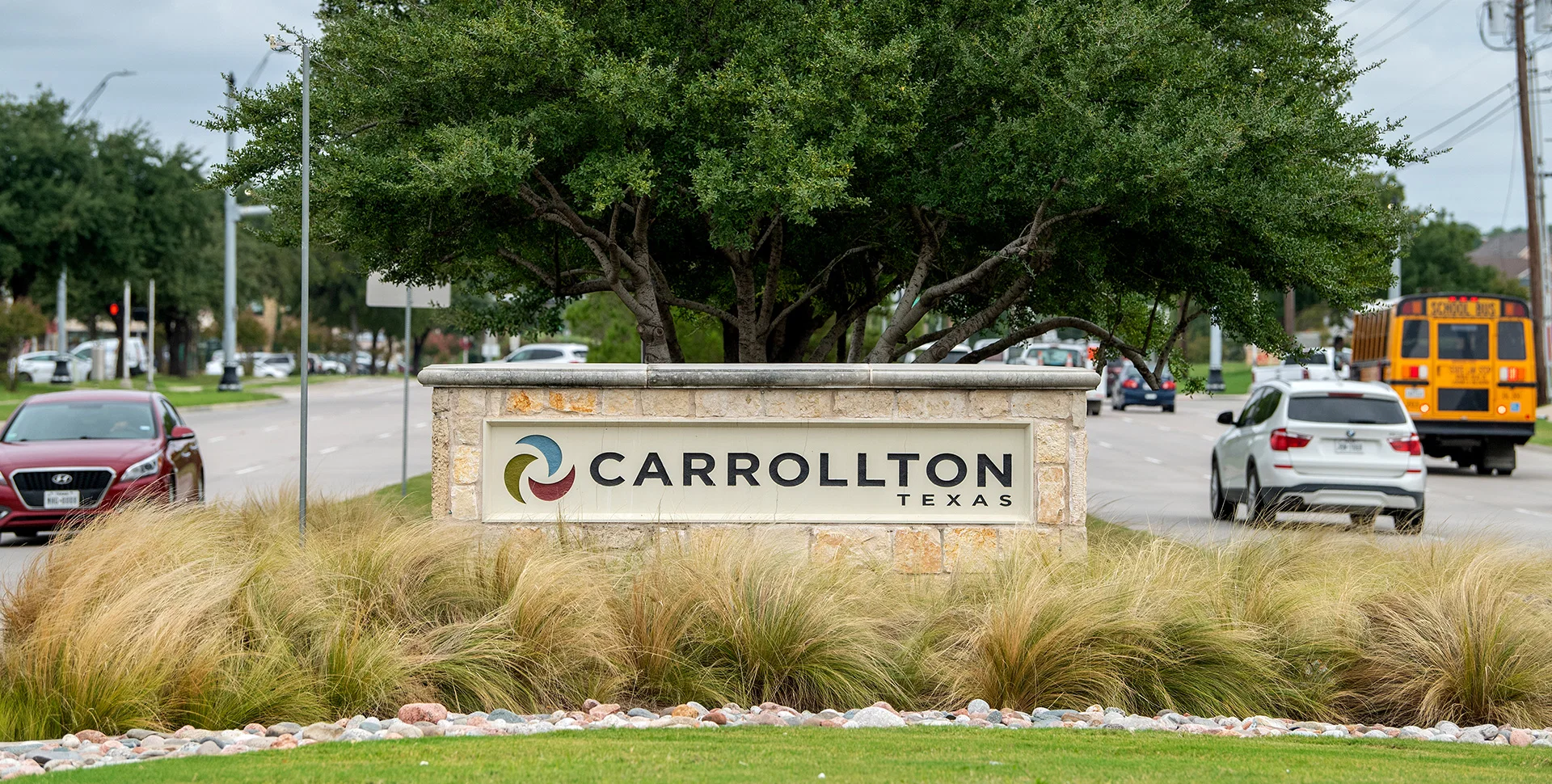
Carrollton, TX
Carrollton runs along I-35E north of Farmers Branch, a business-park and distribution market we serve mainly through Dallas Market Hall and staged warehousing rather than a venue of its own.
Carrollton stretches along I-35E and Old Denton Road, filled in with business parks, distribution centers, and a growing corporate office base, without a dedicated convention or exhibit venue inside city limits. Most event work here is corporate rather than public trade-show floor.
For freight and drayage, Carrollton connects easily to the same Stemmons Freeway warehousing base we use for Farmers Branch and Dallas Market Hall, and for venue needs, we route Carrollton clients south to Market Hall or west to Toyota Music Factory in Las Colinas.
A business-park market along I-35E
Carrollton's growth has followed I-35E and the rail line running beside it, filling in with distribution centers, light manufacturing, and corporate offices rather than retail or entertainment districts, which shapes the kind of events that originate here.
That base gives Carrollton a practical, logistics-minded client profile, companies that need freight handled cleanly more than they need a flashy activation.
Dallas Market Hall as the nearest exhibit venue
Dallas Market Hall, reachable via I-35E south through Farmers Branch, is the closest true exhibit venue for Carrollton-based exhibitors, and it's where most Carrollton companies with a show floor need actually end up.
The drive stays under twenty minutes even with typical I-35E traffic, which keeps Carrollton freight on the same drayage schedule as Farmers Branch.
Toyota Music Factory for a different kind of event
When a Carrollton client wants a livelier setting than a trade show hall, Toyota Music Factory in Las Colinas is a straightforward run west via 635, giving access to live-entertainment-grade production for brand events and launches.
That option comes up most often for companies wanting to reward a team or host a partner event with a different energy than a standard trade show floor.
Freight staging on the I-35E corridor
Carrollton's distribution-center density makes it easy to stage advance freight locally before a short drayage run down to Market Hall or across to downtown, keeping trucking costs lower than a longer haul from outside the metro.
That local staging is especially useful for exhibitors who need a booth built ahead of a show and stored briefly before a scheduled delivery window.
Labor calls from the same North Dallas pool
Labor for Carrollton events draws from the same crew base we use across Farmers Branch and Addison, since the drive time between these markets rarely exceeds twenty minutes on I-35E or the President George Bush Turnpike.
That shared labor base means a Carrollton install and a same-day Addison or Farmers Branch call can run off one coordinated schedule instead of two separate crews.
Drayage and warehousing in a distribution-heavy city
Carrollton's own warehousing and distribution infrastructure means we can often stage freight directly in the city rather than routing everything through Farmers Branch first, shortening the chain for Carrollton-originated shows.
That local capacity also gives Carrollton exhibitors a fallback storage option if a show date shifts and freight needs to sit longer than originally planned.
Local freight staging
Short hauls to Market Hall
Rail-adjacent storage options
Install and dismantle for business-park events
Carrollton install work is usually smaller in scale than a downtown show, sized for a company's own facility or a nearby hotel meeting space, with dismantle timed around normal business hours rather than a multi-day convention schedule.
We typically build a half-day install window into a Carrollton job, which is enough for a modular exhibit but tight for anything requiring custom fabrication on site.
Booth and exhibit build for regional exhibitors
Carrollton-based exhibitors headed to Market Hall or downtown often prefer to have booth fabrication staged locally, since it keeps fabrication and drayage under one coordinated timeline instead of splitting the work across two cities.
That local staging also gives us room to make last-minute booth adjustments without adding another cross-town trip before the show opens.
AV and rigging for business-park venues
Corporate events at Carrollton office campuses generally run on a company's own conference-room or auditorium AV as a base, with our team supplementing lighting and screens for product launches or larger internal gatherings.
For a bigger internal event, we bring in portable rigging and lighting rather than relying on whatever a business-park conference center already has installed.
Show-site supervision on shared routes
Because Carrollton shows frequently end up on the Market Hall or downtown show floor, on-site supervision is coordinated with the same lead handling the Farmers Branch freight handoff, keeping one continuous chain of custody from warehouse to hall.
That continuity matters most on multi-stop days, when the same truck and crew move from a Carrollton warehouse pickup straight into a Market Hall install.
Parking and dock access at Carrollton facilities
Business-park facilities in Carrollton typically offer dedicated truck courts, which makes load-in more predictable here than at a shared downtown dock, though hours are often tied to the host company's own building access policy.
We confirm those access hours directly with the host company ahead of time, since a business park's own security desk does not always know an outside crew is expected.
Crew lodging along the I-35E corridor
Crews working Carrollton-based install jobs generally stay at corridor hotels near the LBJ Freeway and Dallas North Tollway interchange rather than downtown, which keeps them close to both the local job site and the Market Hall or Toyota Music Factory runs that often follow.
That corridor placement also cuts down on drive time for crews working a multi-day install that spans a local Carrollton job and a downstream Market Hall date.
Lead time for Carrollton-originated shows
Because much of Carrollton's freight work supports shows elsewhere in the metro, we ask for the same lead time as a Market Hall date, generally a week or more ahead of install for advance freight staging.
Local freight already in Carrollton storage can move on shorter notice, but any new fabrication still needs the standard multi-week build timeline regardless of where the show lands.
Budget realities for a distribution-corridor market
Warehousing and drayage in Carrollton run competitively with Farmers Branch, and the shorter distance to Market Hall versus downtown can trim trucking costs on shows staged locally.
Companies with a recurring event calendar also benefit from storing reusable booth structures in Carrollton between shows rather than paying for fabrication every time.
What makes Carrollton specific
Carrollton is a logistics and business-park city more than an event destination, with its value coming from freight and staging capacity rather than a show floor of its own.
Its position between three warehousing-heavy suburbs makes it more of a routing waypoint than a final destination for most shows we run.
Event types that fit here
Internal corporate meetings, product training, and freight staging for regional shows make up the bulk of Carrollton work, alongside occasional branded activations routed to Toyota Music Factory.
The mix leans toward internal and logistics-driven work rather than public programming, which fits the business-park character of the city itself.
Corporate training
Freight staging
Branded activations
Routing to nearby markets
Carrollton sits between Farmers Branch to the south, Lewisville to the north, and Addison to the east, giving it flexible routing to warehousing, venues, and the Dallas North Tollway corridor.
That position between three logistics-heavy suburbs is part of why we keep Carrollton warehousing in regular rotation rather than treating it as a backup option.
How we run it in Carrollton
We treat Carrollton as a logistics extension of the North Dallas corridor, staging freight locally where it makes sense and routing show-floor needs down to Dallas Market Hall or across to Toyota Music Factory for branded events.
Most Carrollton work is really about getting freight and crew efficiently to a venue elsewhere in the metro, with the city itself serving as a staging point along the way.
Carrollton, TX — what the area looks like for events
Carrollton, TX is one of the the city area submarkets we cover for trade show work.
Trade show work in Carrollton, TX shares most of its structure with larger the city projects. Where it diverges is in the nearby venue mix, freight routing, and local hotel block availability.
the city trade show market
Trade shows in the city move fast. Major venues book out months in advance, freight windows run tight, and the exhibitors who win their weeks are the ones who arrive with a plan already in hand.
Trade show weeks in the city compress decisions. Dock windows are finite, rigging slots fill fast, and the labor calendar around a citywide conference runs hot. Exhibitors who treat planning as optional lose time they don't get back.
the city offers more than 440,000 square feet of meeting space and is near two major airports, which sets the practical ceiling for a booth program working the market.
Omni Dallas Hotel as adjacent to the Dallas Convention Center, reinforcing the downtown hotel-plus-convention-center workflow — a useful reference point when sizing a project.
Where the city shows actually happen
The building matters more than almost anything else in a trade show plan. A few the city venues carry most of the calendar.
Across the the city venue set, what changes between buildings are the labor model, the rigging approval path, the drayage setup, and the published move-in window. The plan has to match the specific building.
Hilton Dallas Lincoln Centre is one of the anchors. It includes 503 guest rooms.
Fair Park: it is a 277-acre historic landmark campus in South Dallas.
Marriott Dallas/Fort Worth Westlake. It offers over 26,000 square feet of meeting and event space.
Who handles what during the the city install window
Most of what goes wrong on a the city install traces back to assumptions about labor. We stay inside the rules for the specific show, which prevents it.
The workable version of the city labor planning is boring on purpose: read the manual, match the scope to its categories, order what the venue sells directly, and schedule everything else around its posted windows. Surprises almost always trace back to a step someone skipped.
Scope in Carrollton, TX
Projects in Carrollton, TX typically include design work, fabrication or rental sourcing, graphics production, show-service paperwork, freight, install, show-hours coverage, and strike.
What shows up in most budgets: structure, graphics, AV, show-service orders through the venue, labor, freight, supervision days, and closeout. Individual projects layer or remove items based on scope.
A well-run project has few surprises on install day because the handoffs upstream were tight. A bad one has many, because they weren't.
Multi-show programs add asset management: storage, refurbishment, graphic swaps, and scheduled re-kitting so the booth rolls cleanly from the city to the next city on the calendar.
Out of scope by default are show organizer fees, booth lease costs paid directly to the show, staff travel and per diems, and any custom software or data-capture tooling the client runs on its own stack. Those stay on the client side and plug into the project through coordination, not rebilling.
From first call to strike
First step on any project is pinning down the show, the floor plan, the deadlines, and what success actually looks like. Everything downstream hinges on those answers.
Venue coordination comes next. We pull the current exhibitor manual, confirm dock and freight windows, submit rigging approvals where needed, and place utility orders against the venue specs we work to.
With venue details locked, production runs. Build, print, AV integration, rentals, and the show floor lead's playbook all come together in this phase.
The install phase has one owner on the floor. That person handles the labor calls, the graphics questions, the sequence adjustments, and the daily update.
During show hours, the booth functions as a live operating space. A booth supervisor manages repairs, sponsor requests, lead-capture issues, and any venue questions so client staff can focus on conversations.
After the show, strike runs against the venue's posted window, and a same-day debrief captures what held and what needs to change before the next date.
Budget and timeline
Pricing is driven by real line items: fabrication or rental, graphics, show services, labor, freight, and travel where it applies. Round numbers without that breakdown usually hide something.
The levers that matter: build path (custom, rental, or hybrid), footprint, venue service fees, graphics, freight, and supervision days. A 10x10 turnkey rental and a 30x50 custom island with a double deck are entirely different projects.
A clean schedule starts 4 to 5 months out for custom work and 2 to 3 months for rentals. Shorter lead times are workable but push rush premiums and limit material choices.
How project performance gets measured
A successful project in the city looks like a booth that lands on time, passes venue inspection on the first walk, runs without incident through show hours, and ships out the same day it strikes.
Exhibitors who measure programs seriously track leads, floor-booked meetings, and post-show pipeline. The build and the install are upstream inputs to those KPIs.
Client teams sometimes want the booth to carry the pipeline on its own, but the best-performing programs treat the booth as a platform and put real operators on it. On-floor conversation discipline moves the KPIs more than any scenic decision.
The advantage of a local the city team
Trade Show Services operates out of the city with a full in-house production shop. Custom fabrication, rental inventory, graphics production, and show-site labor live under one roof.
The difference from a national vendor shows up at the dock. A local team with an in-house shop can solve most install-day problems in the time it takes to drive back to the building with the right part.
Over a multi-show calendar, the compound value of a single team shows up in fewer surprises. The second install is faster than the first, the third is faster than the second, and by the fourth the project runs on memory and documentation rather than first-principles planning.
Carrollton, TX planning questions
Q: Do you work at Hilton Dallas Lincoln Centre?
Yes. it is located in the LBJ Freeway corridor in North Dallas. Projects at that building are planned against its specific floor rules.
Q: How much lead time is ideal?
Custom builds run best with 16 to 20 weeks of lead time. Rentals take 8 to 12 weeks. Work inside 4 weeks is possible but raises costs and narrows the options.
Q: What information kicks off a project?
The show, the venue, the booth number, the dates, and a target budget range. From those, an initial scope and a realistic cost come back within a few days.
Q: Who runs the booth on-site?
One named show-site lead runs the install, the show hours, and the strike. That person carries the floor plan and the punch list from crates to doors and reports up once a day.
Q: Can the booth travel to the next city on our calendar?
Yes — builds are designed for modular reuse unless single-use scenic is specifically required. Same structure, swappable graphics, standard crates. the city programs that roll to another city on the same calendar get handled end to end.
Q: What happens if something breaks during show hours?
The show floor lead handles it. Minor repairs happen in place; anything larger gets sourced from the local fabricators or rerouted through the venue's service desk.